Designing a scalable, API-driven onboarding experience for first-time credit card users
Background & Context
ZET helps first-time and under-banked users build and improve their credit score.
However, credit card applications were handled via bank app redirections, breaking trust, context, and control.
This resulted in:
🛑 High drop-offs during application
🛑 Poor visibility into user progress
🛑 Inconsistent experience across banks
This issue was especially severe for users from Tier 2–4 cities and first-time credit users, who struggled to understand bank apps and application status.
Target Users
👤 Users improving their credit score using ZET
👤 First-time credit card applicants
👤 Users from Tier 2–4 cities
👤 Users with low financial literacy
What do we want to achieve?
1
Create a Guided Onboarding Journey With Clear Expectations
2
Reduce drop-offs and improve application completion rate
3
Provide Clear Application Status to Improve User Confidence
4
Problem Discovery
The problem was identified through multiple inputs:
◆ Funnel data showing high drop-offs after bank redirection
◆ Support complaints from confused users
◆ Feedback from ZET Partner agents, who directly interact with users while selling credit cards
Key insights
📌 Users are willing to fill long forms only when guided properly
📌 Trust is a bigger blocker than effort
📌 Bank apps rarely explain what happens after submission
📌 Redirection increases fear of rejection and abandonment
Research & Insights
Due to time constraints, lightweight but effective research was conducted:
Key Insights
Users are willing to fill long forms only if the journey flow is engaging
Trust is a bigger blocker than effort
Bank apps rarely explain what happens after submission
Redirection increases fear of rejection and abandonment
UX Challenges & Constraints
Key Insights
UX Constraints
◆ Limited flexibility in modifying backend logic
◆ Some input fields were non-editable
◆ Status updates depended entirely on bank responses
Technical Constraints
◆ Fixed field order from bank APIs
◆ Mandatory steps that could not be skipped
◆ Delays in receiving application status from APIs
Design Approach to solve problems
Goal: Make a long, API-driven banking flow feel simple, guided, and trustworthy for first-time users.
Key Decisions
❇️ Step-by-step journey with clear progress visibility
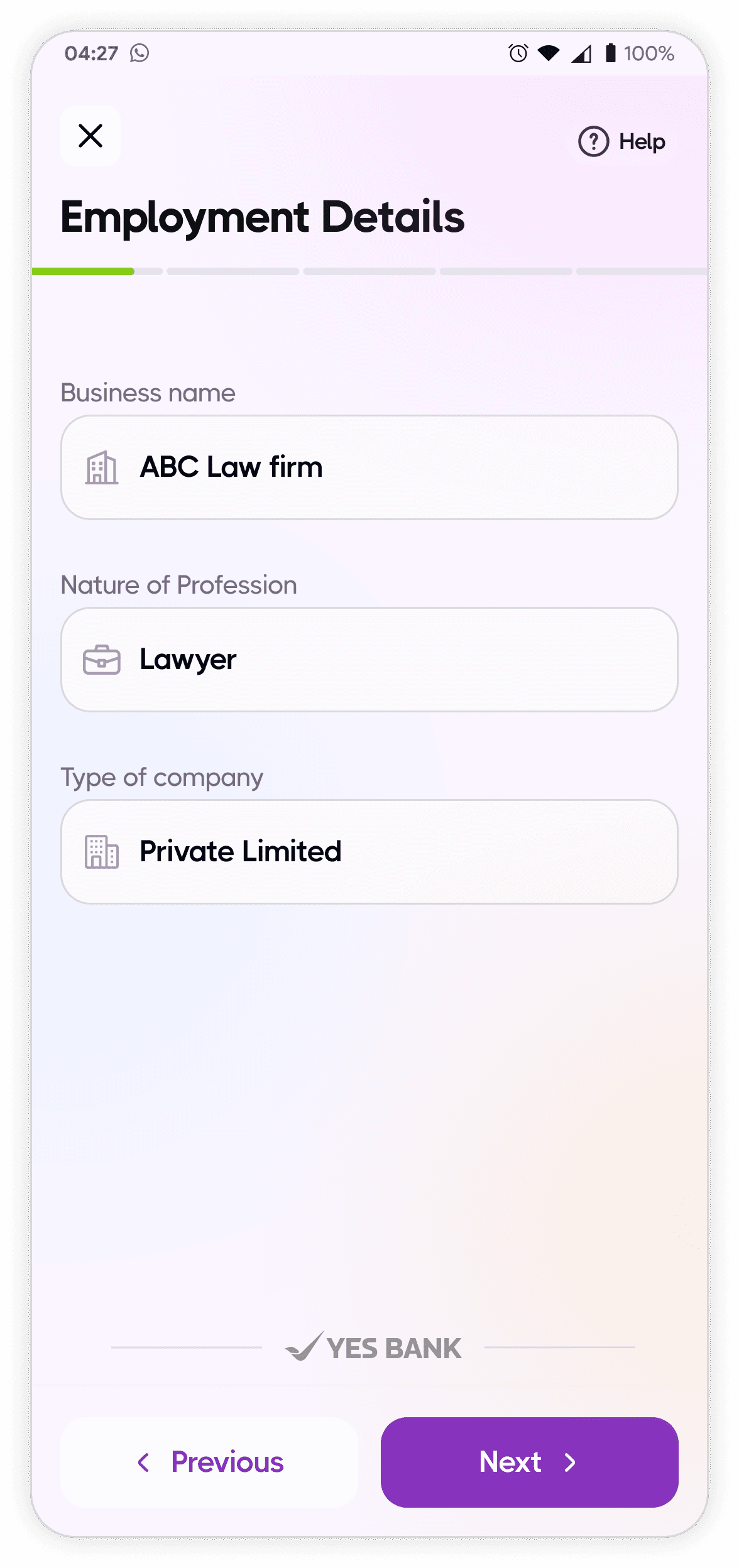
❇️ Short, chunked forms with fewer inputs per screen
❇️ Autosave to avoid data loss and frustration
❇️ Simple language and clear information grouping
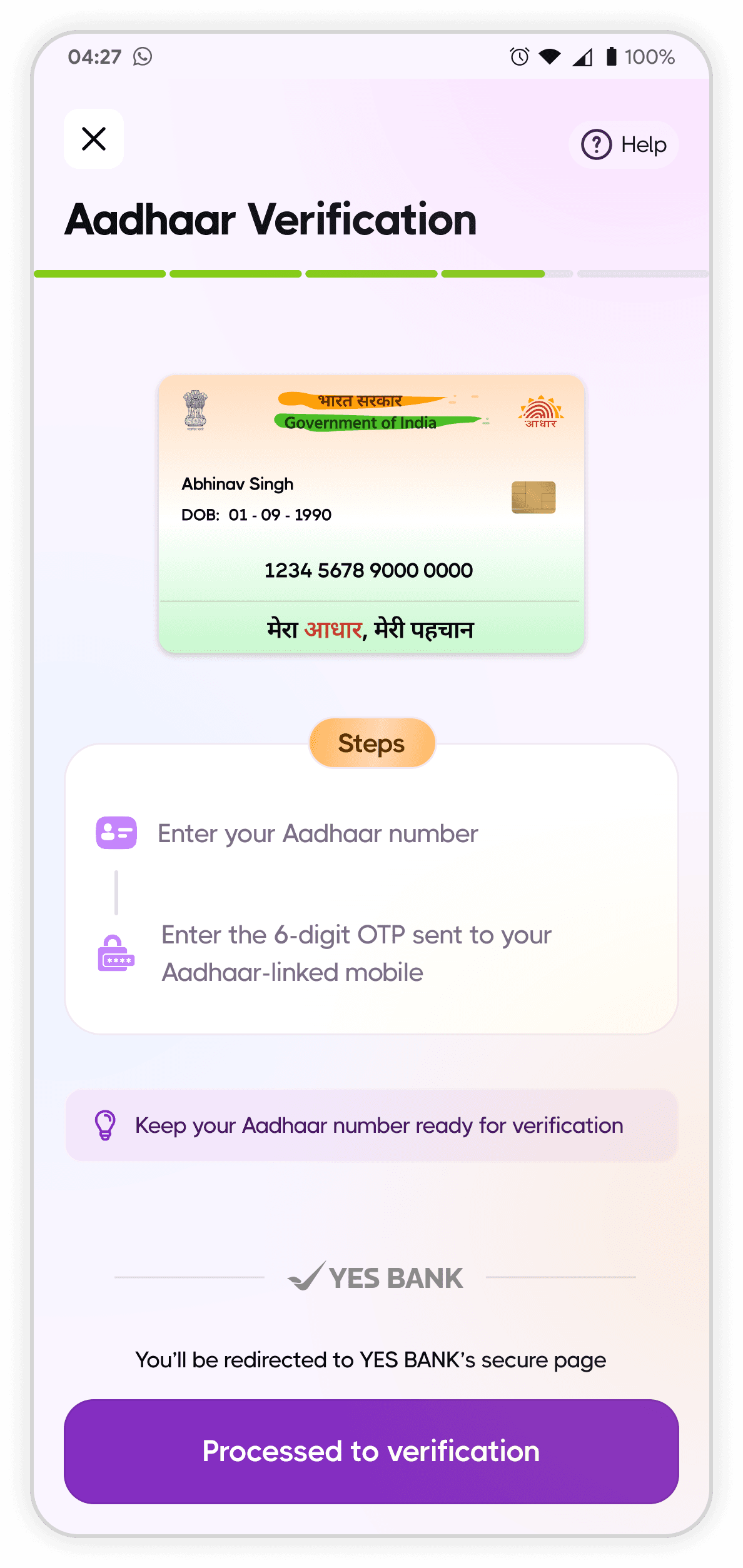
❇️ Trust cues (bank, RBI, certifications) throughout the flow
❇️ Eligibility-first entry to avoid rejection anxiety
Credit card application process
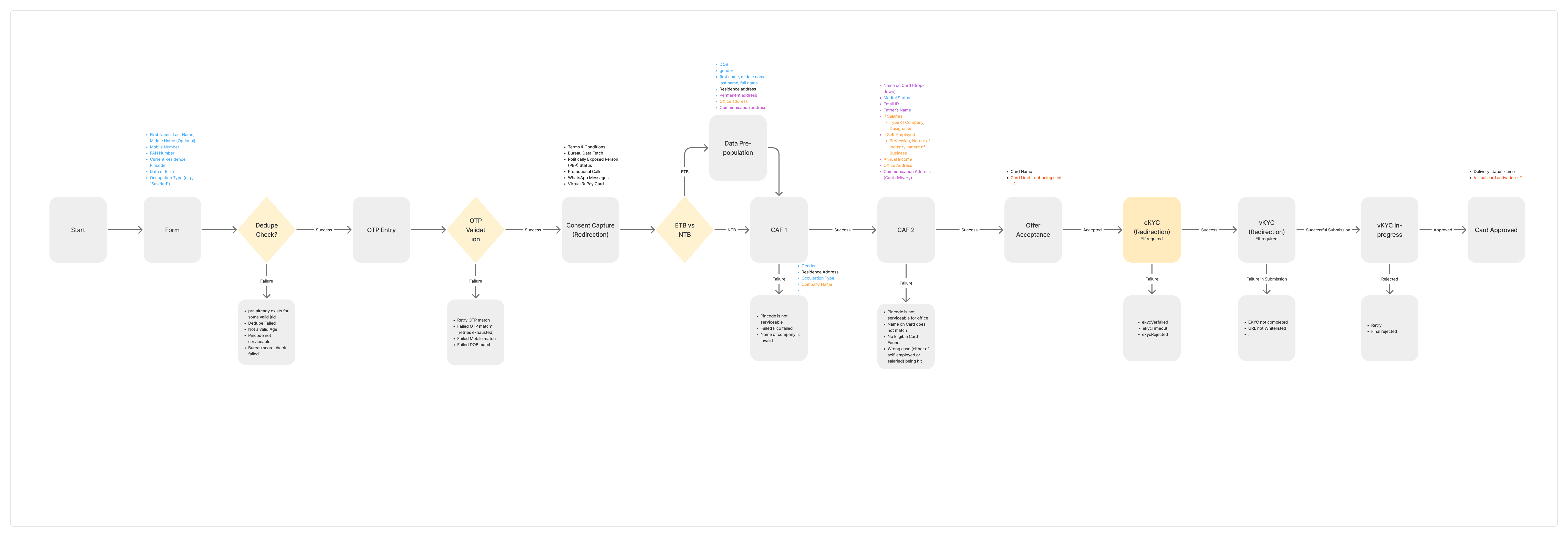
Current design has focused to create YES Bank credit card flow based on the bank's API's
1/4
Create a Guided Onboarding Journey With Clear Expectations
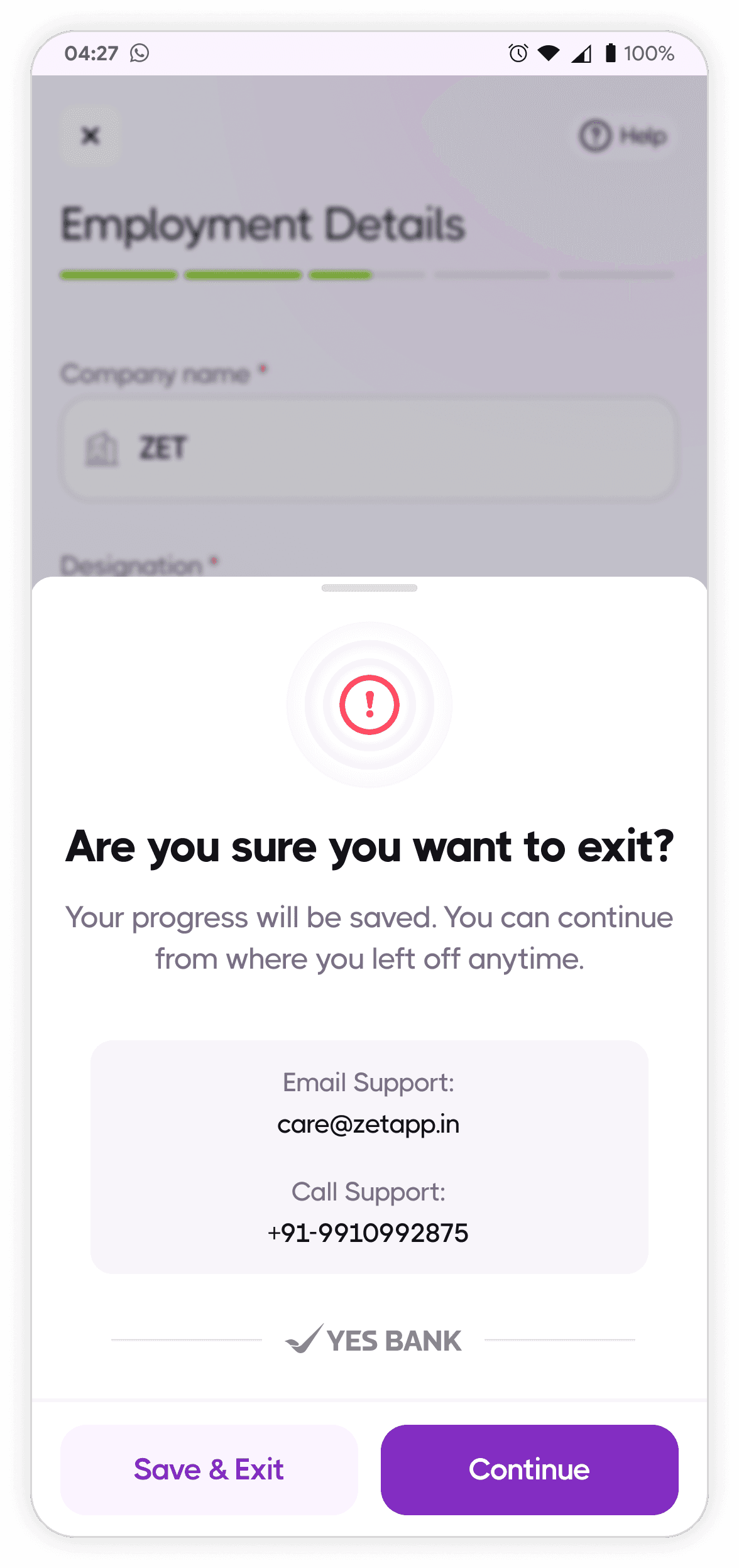
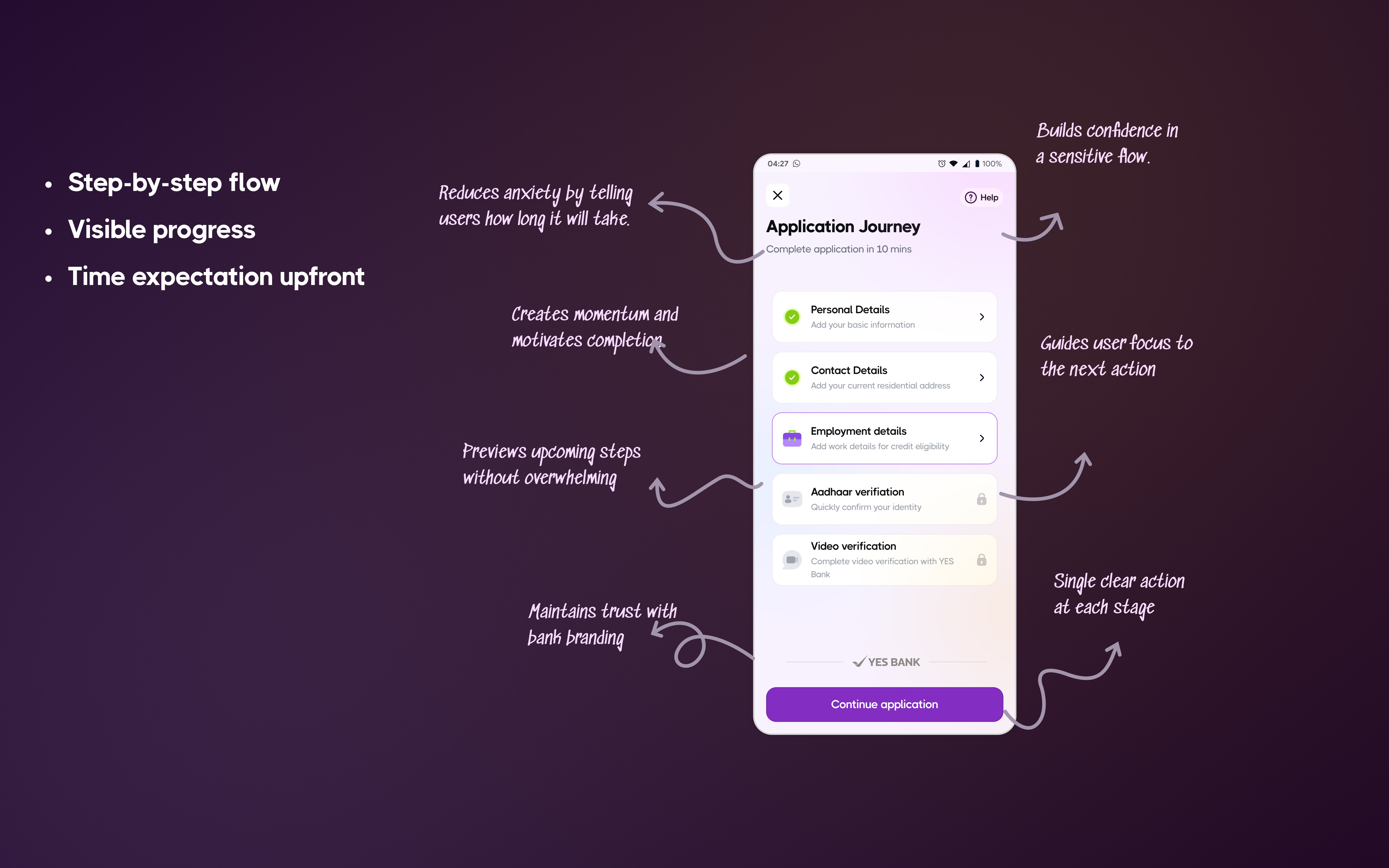
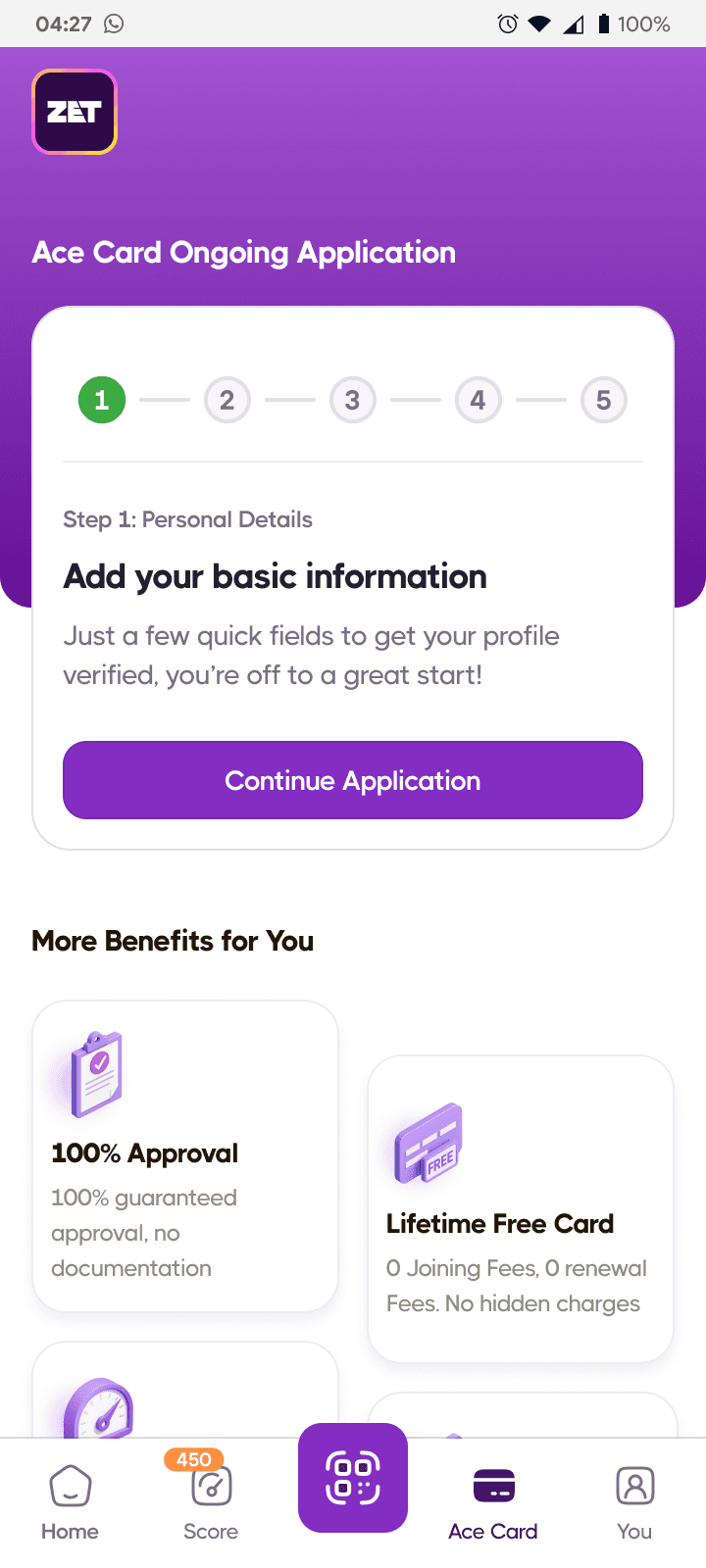
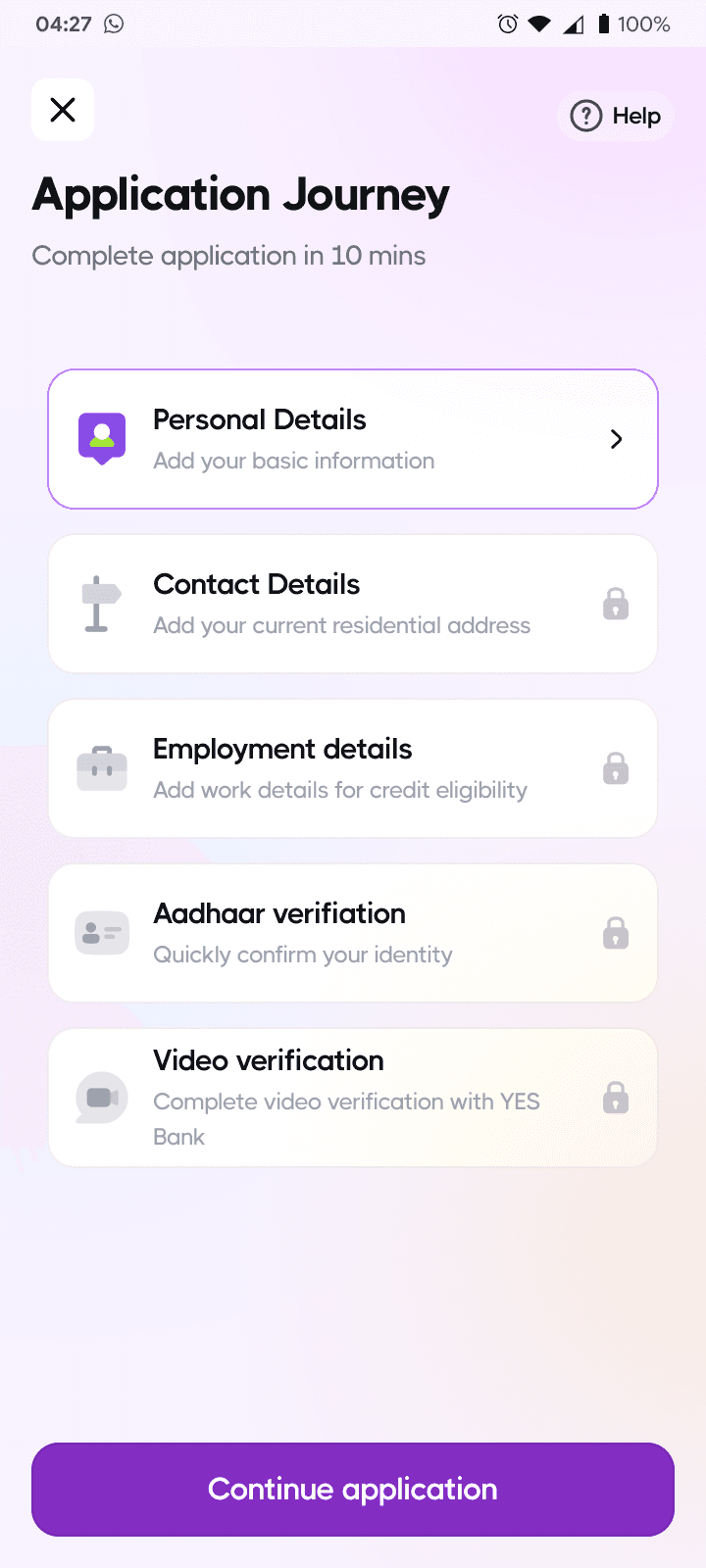
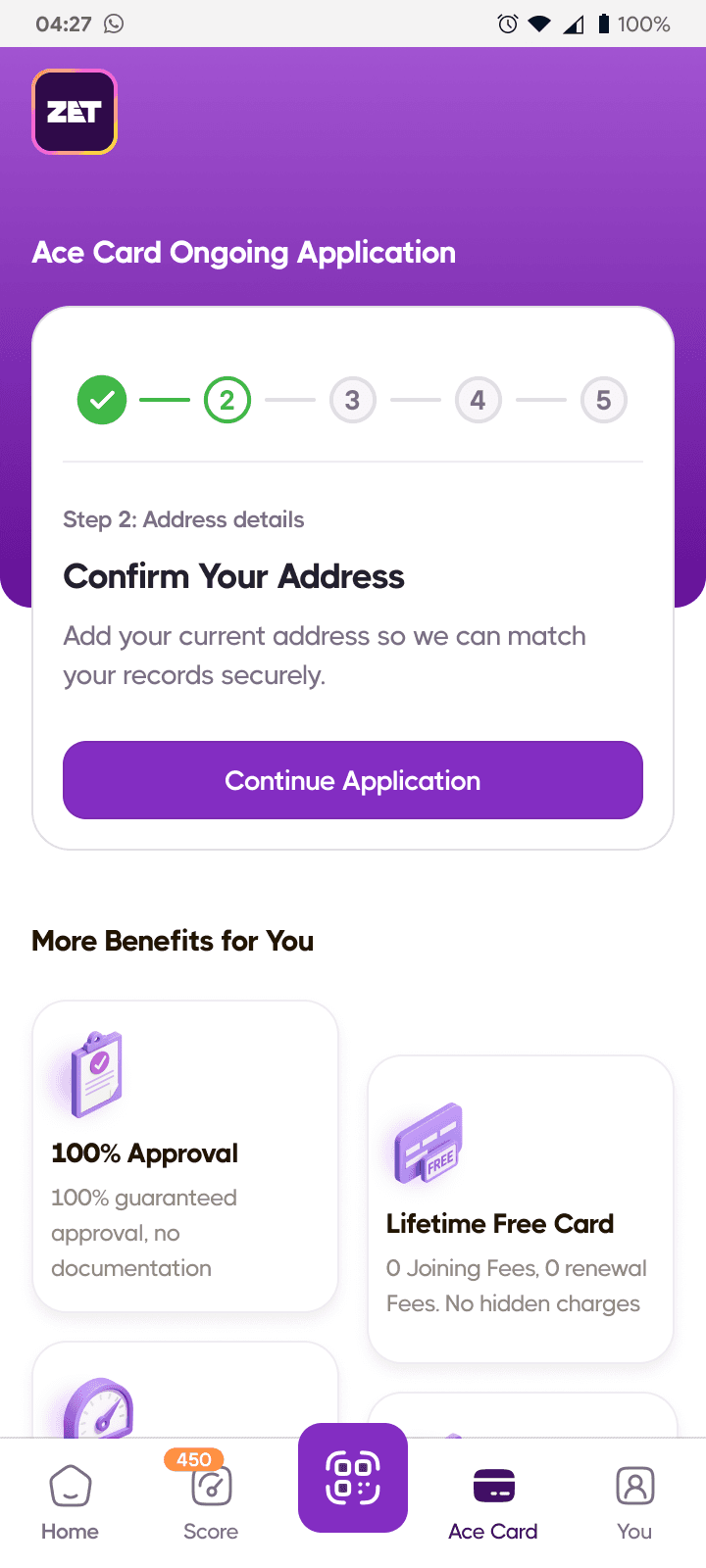
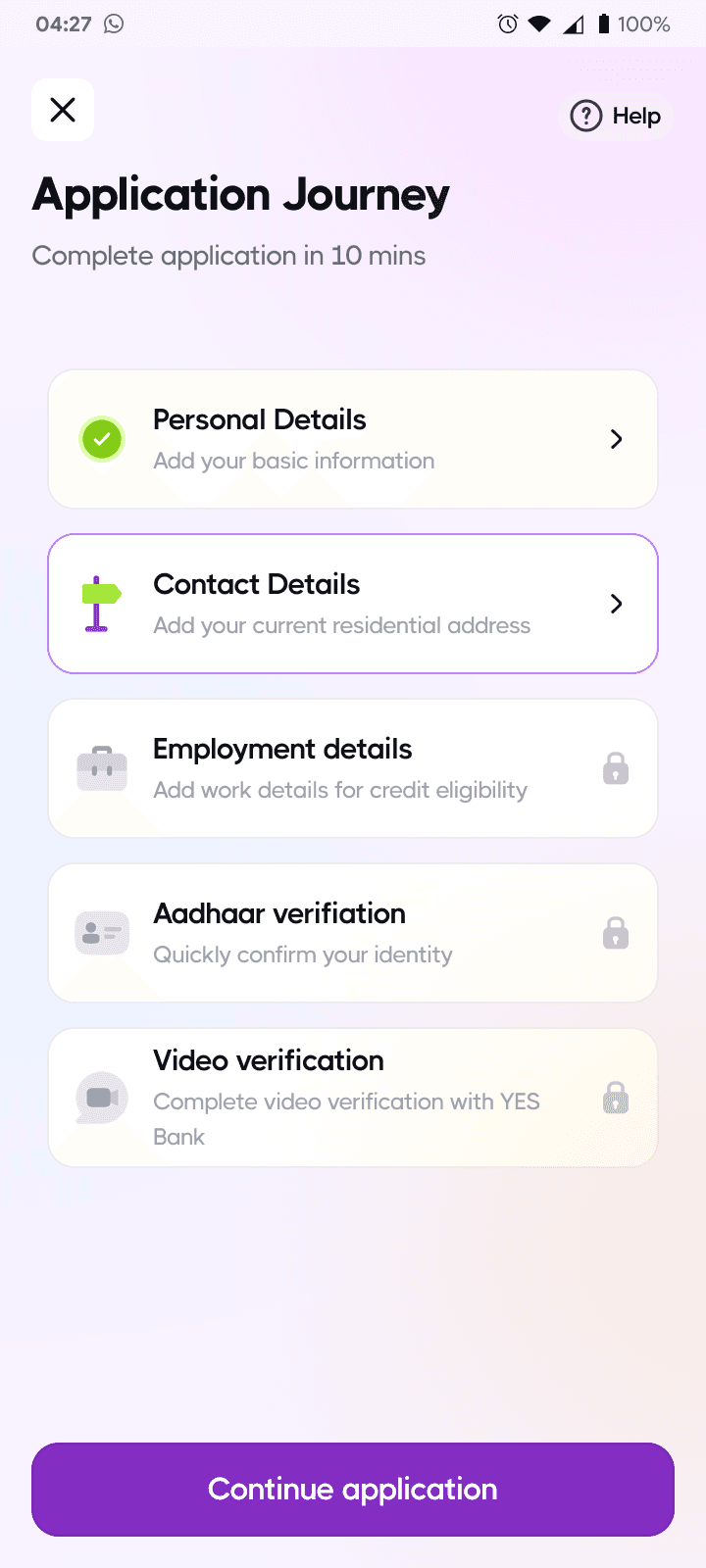
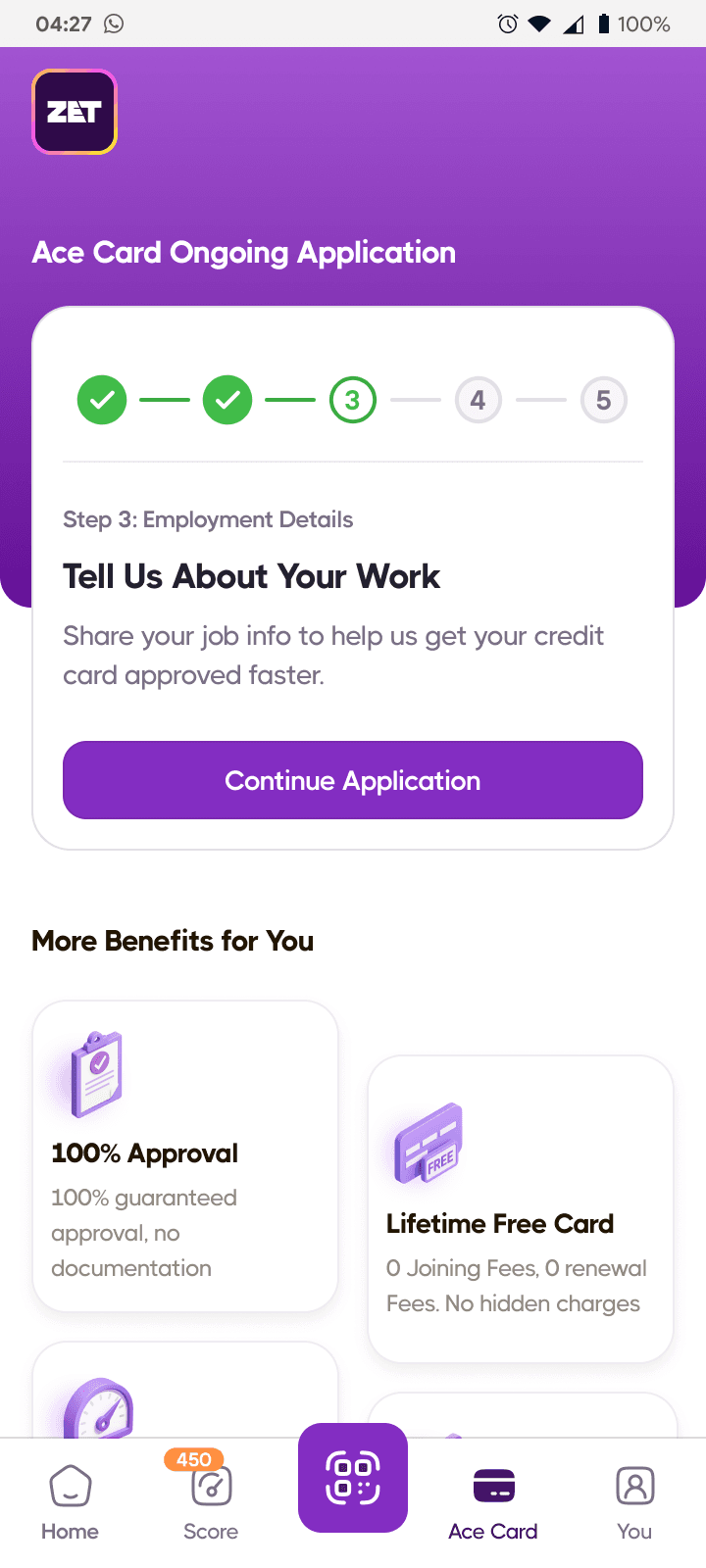
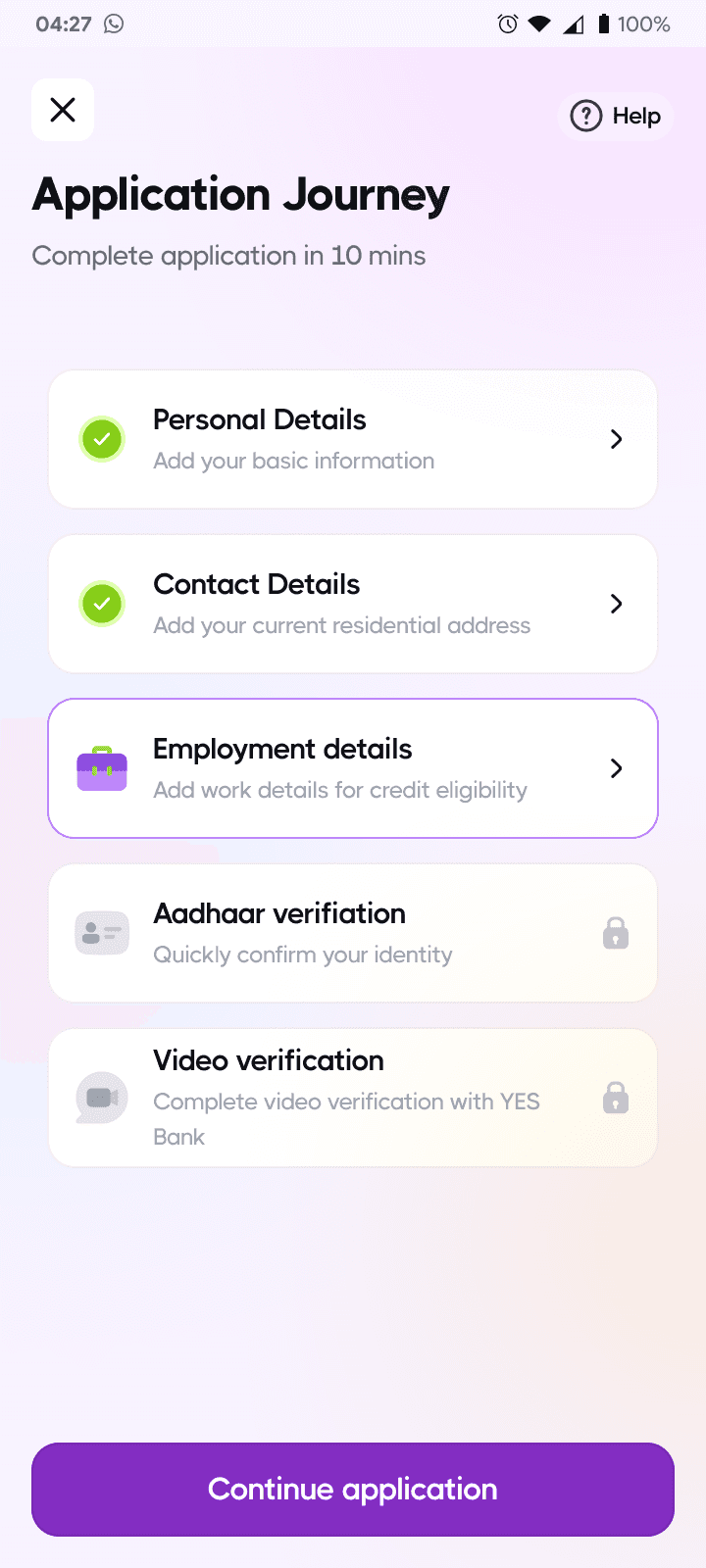
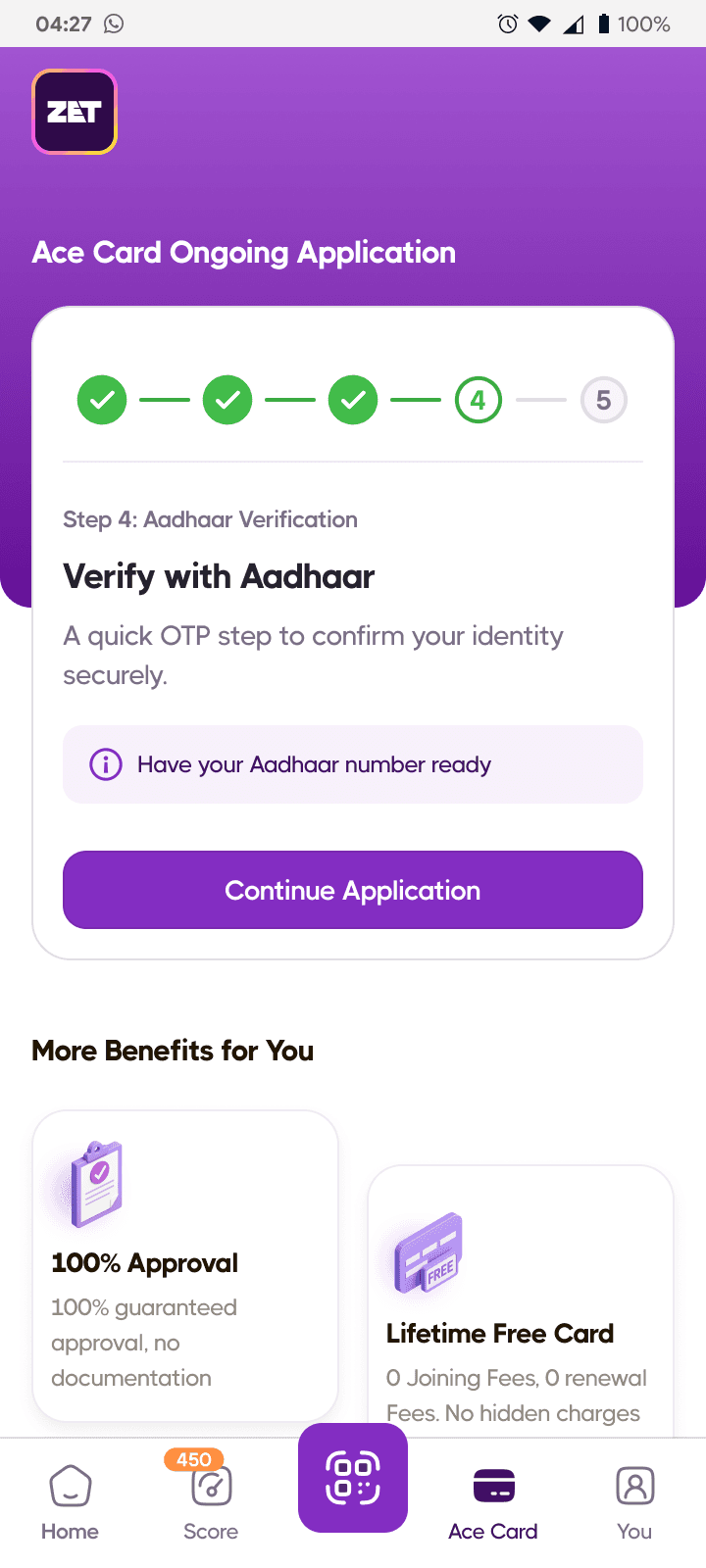
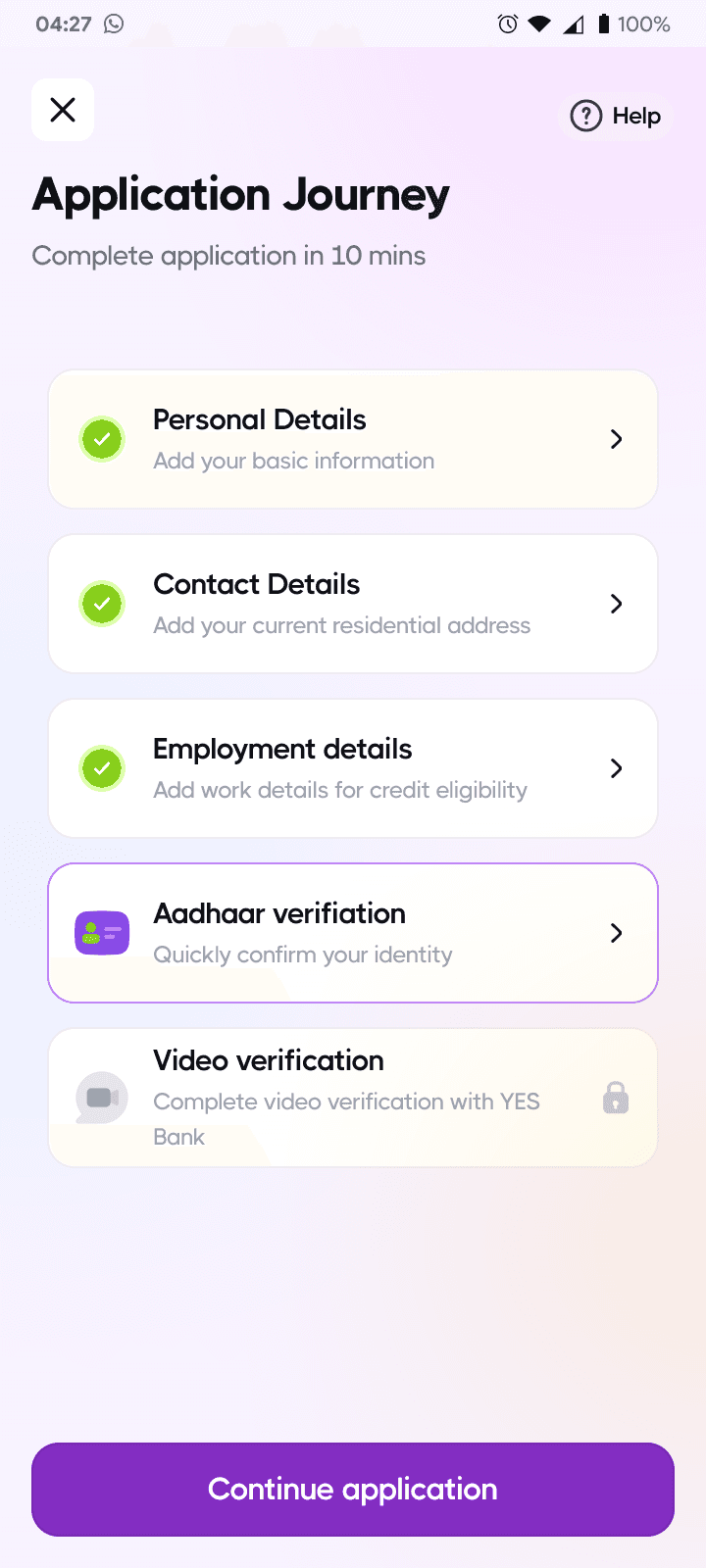
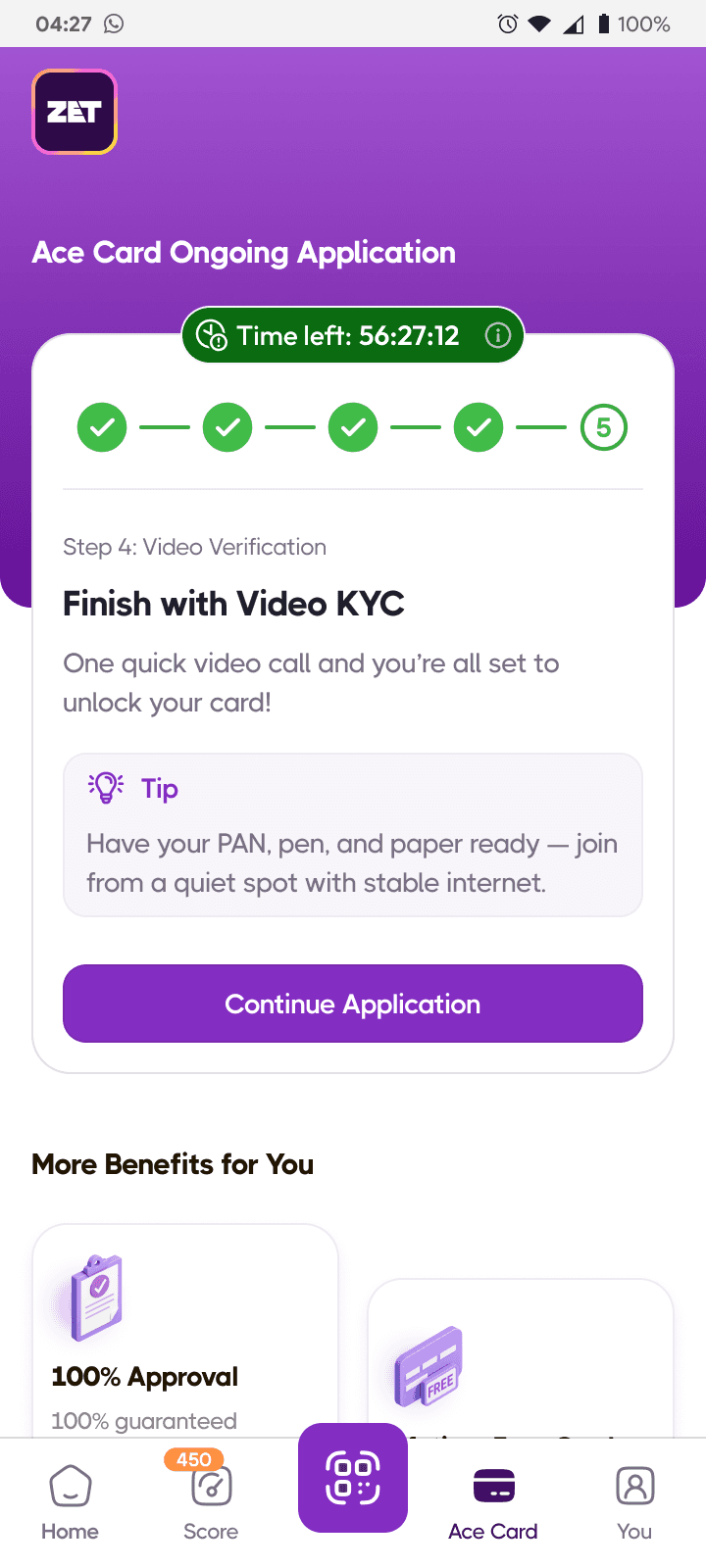
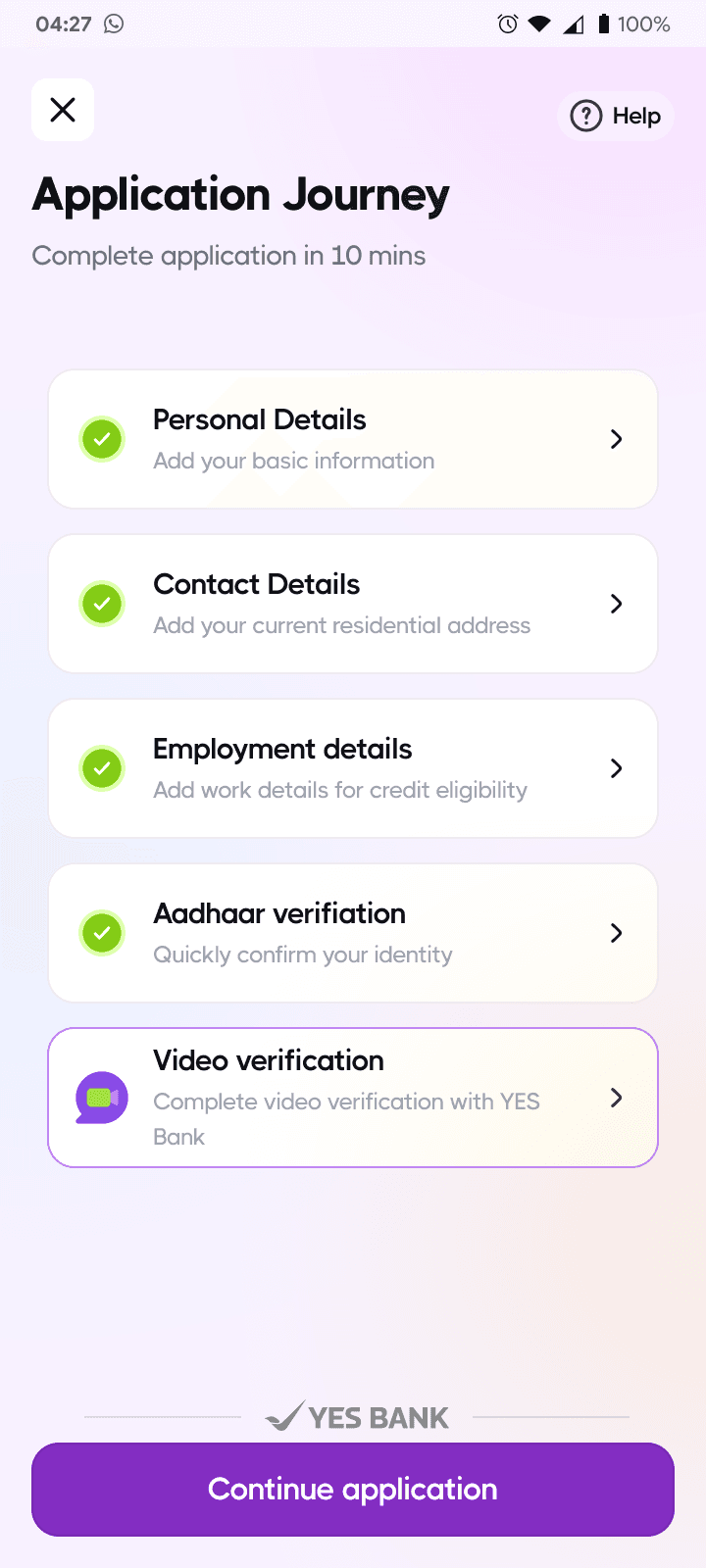
The journey starts with a step overview screen that clearly shows all application stages, current progress, and estimated time. This screen acts as a single source of truth, allowing users to understand where they are in the journey and safely resume from the same step if they exit and return.
Easy navigation
Clear time estimation
Progress visibility
Why this approach?
First-time users often abandon long flows due to uncertainty and fear of losing progress. A clear step overview with resume capability was chosen to reduce anxiety, set expectations early, and reassure users that their progress is safe.
2/4
Reduce drop-offs and improve application completion rate
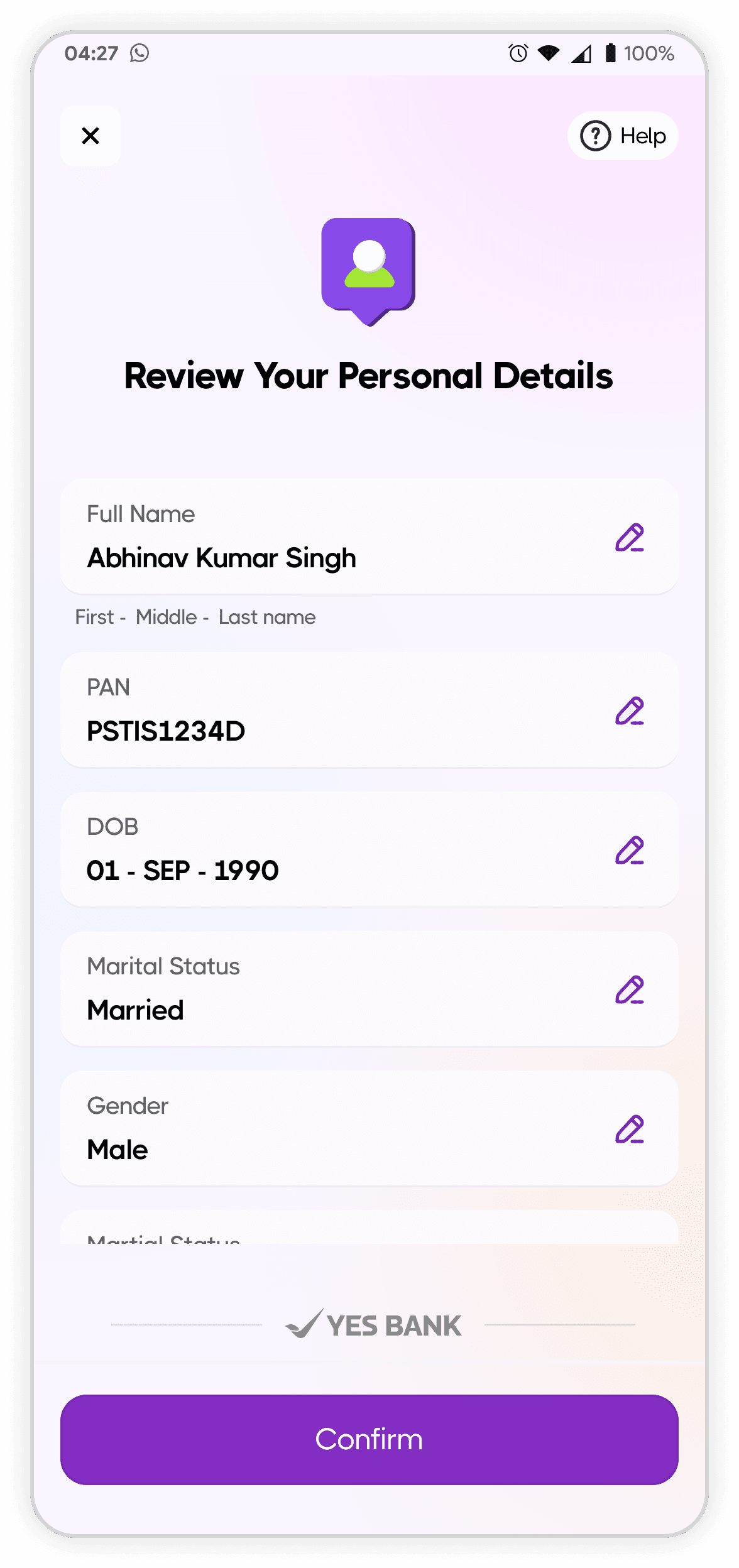
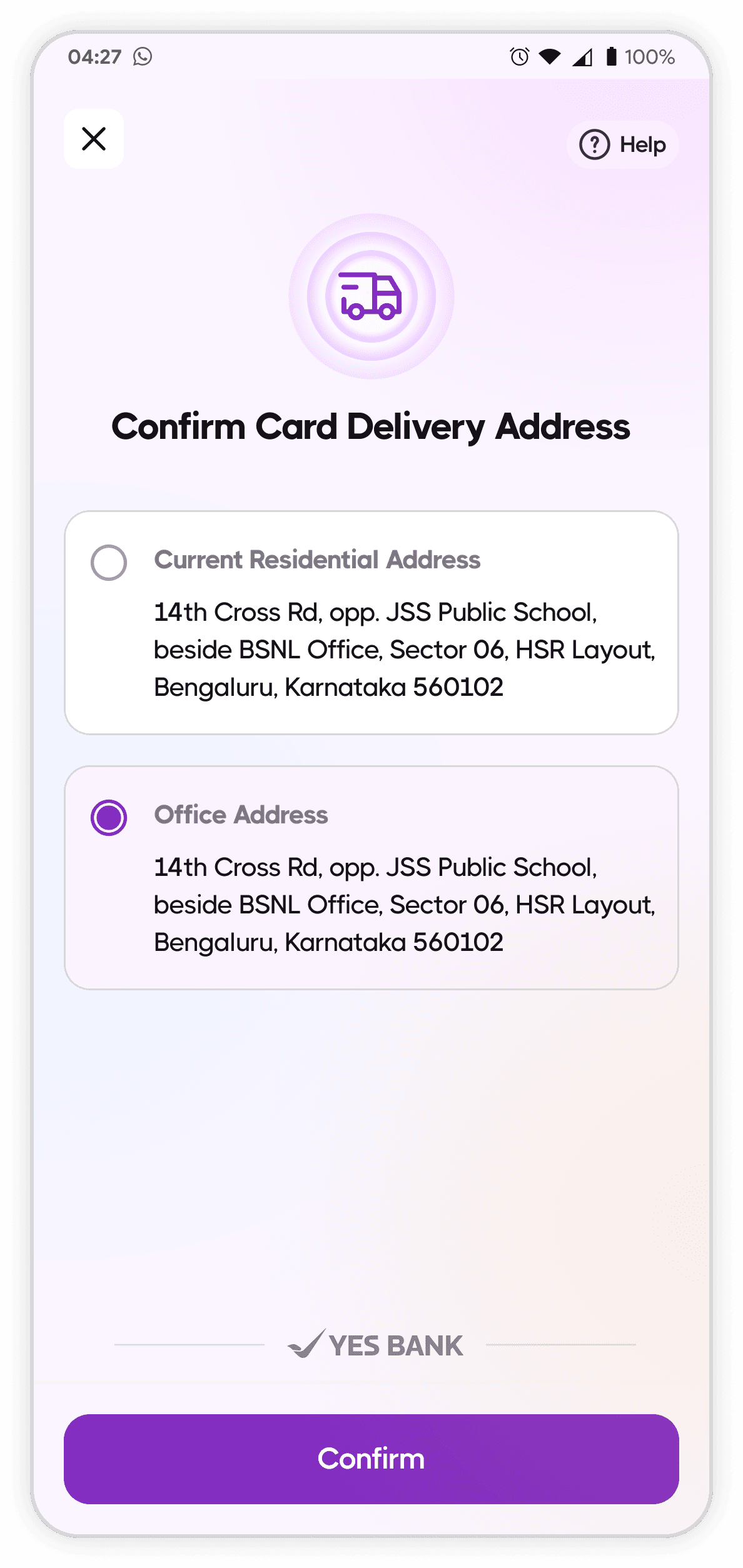
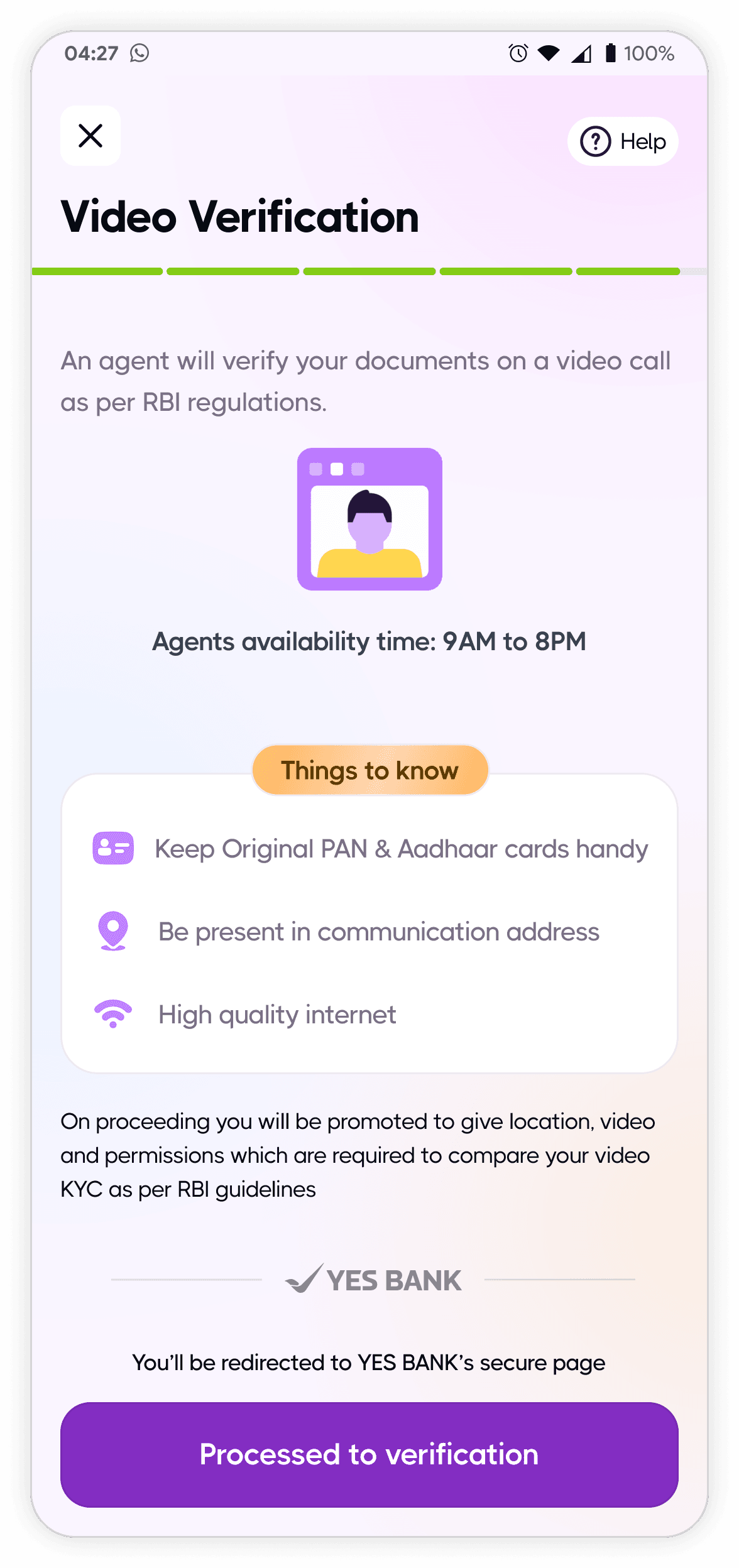
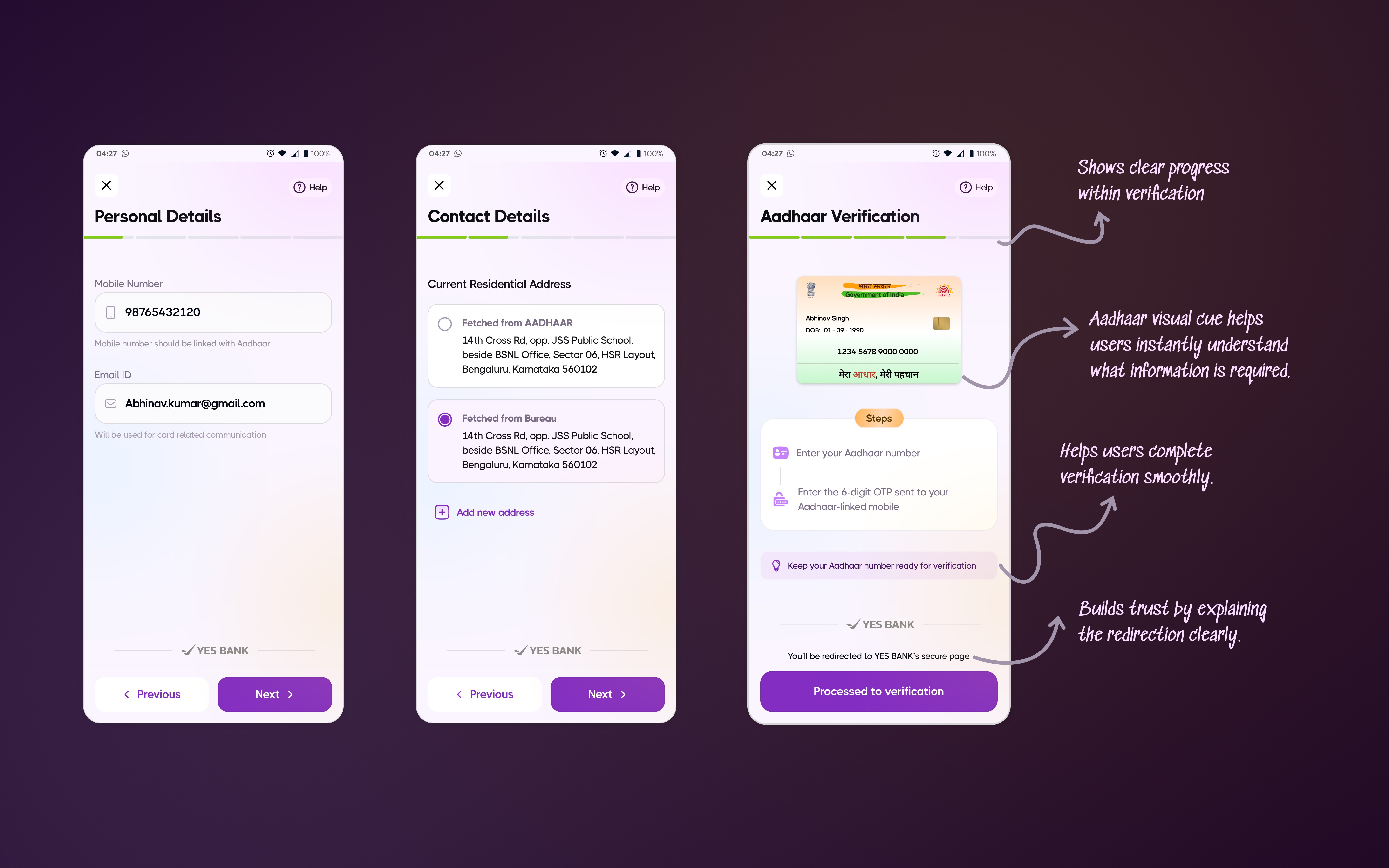
Long forms were broken into smaller, grouped sections with fewer inputs per screen. Autofill and pre-fetched data were used where possible, while clear bank branding and redirection messaging helped users feel confident during sensitive verification steps.
Simplified form structure
Autofill & smart defaults
Building Trust
Why this approach?
Since the number of steps was constrained by bank APIs, reducing actual form length wasn’t possible. The focus shifted to reducing perceived complexity through chunking, autofill, and trust cues addressing the main reasons users abandoned the journey.
3/4
Provide Clear Application Status to Improve User Confidence
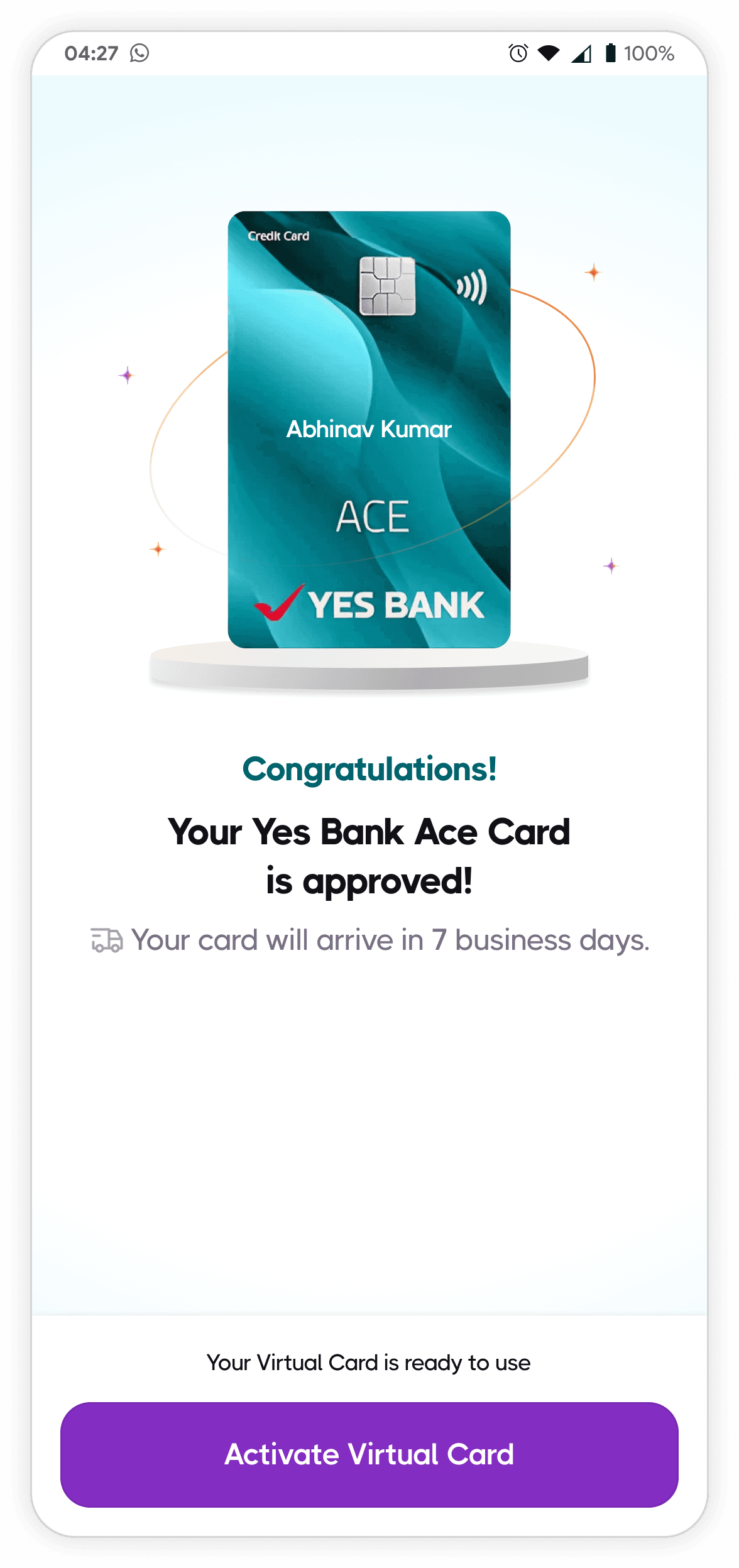
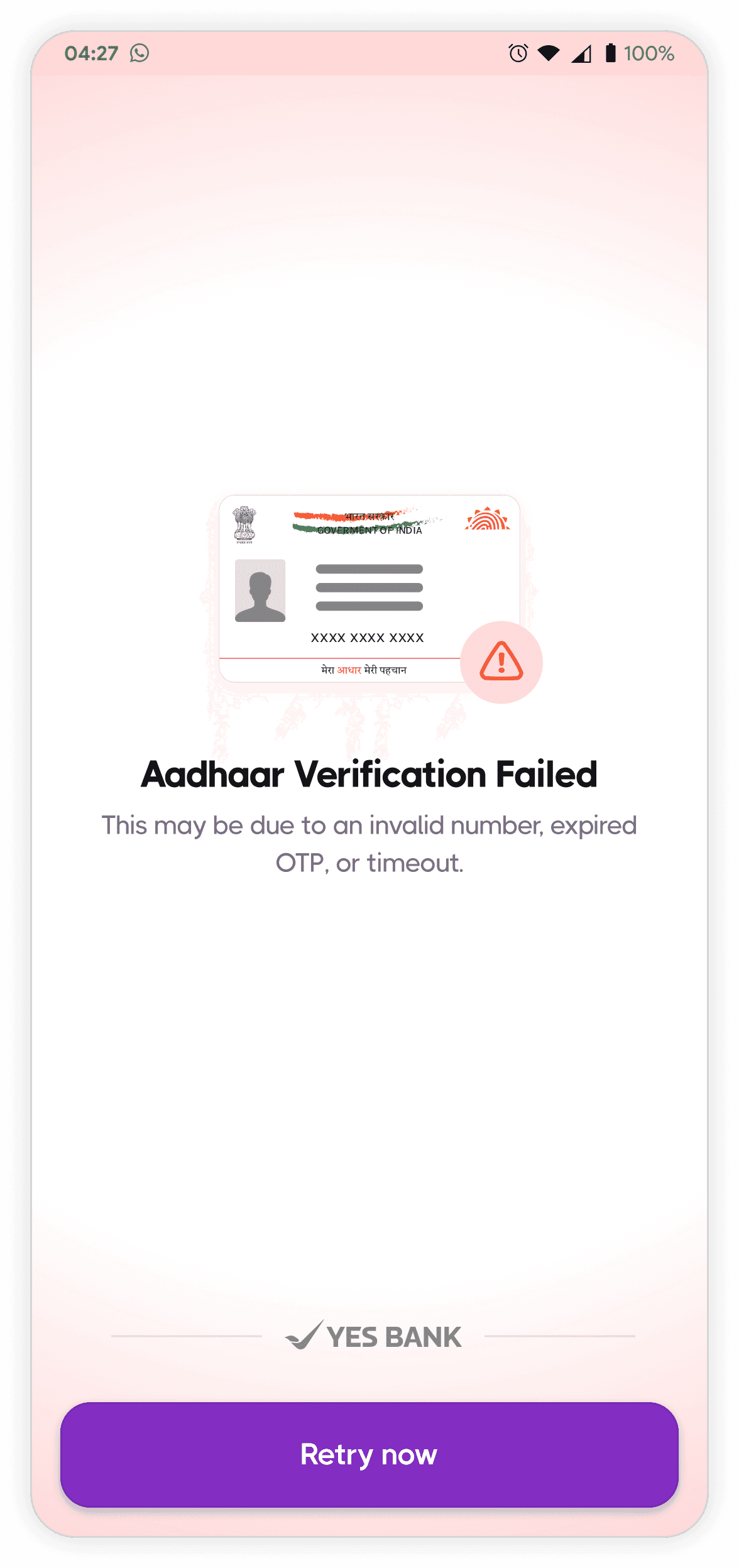
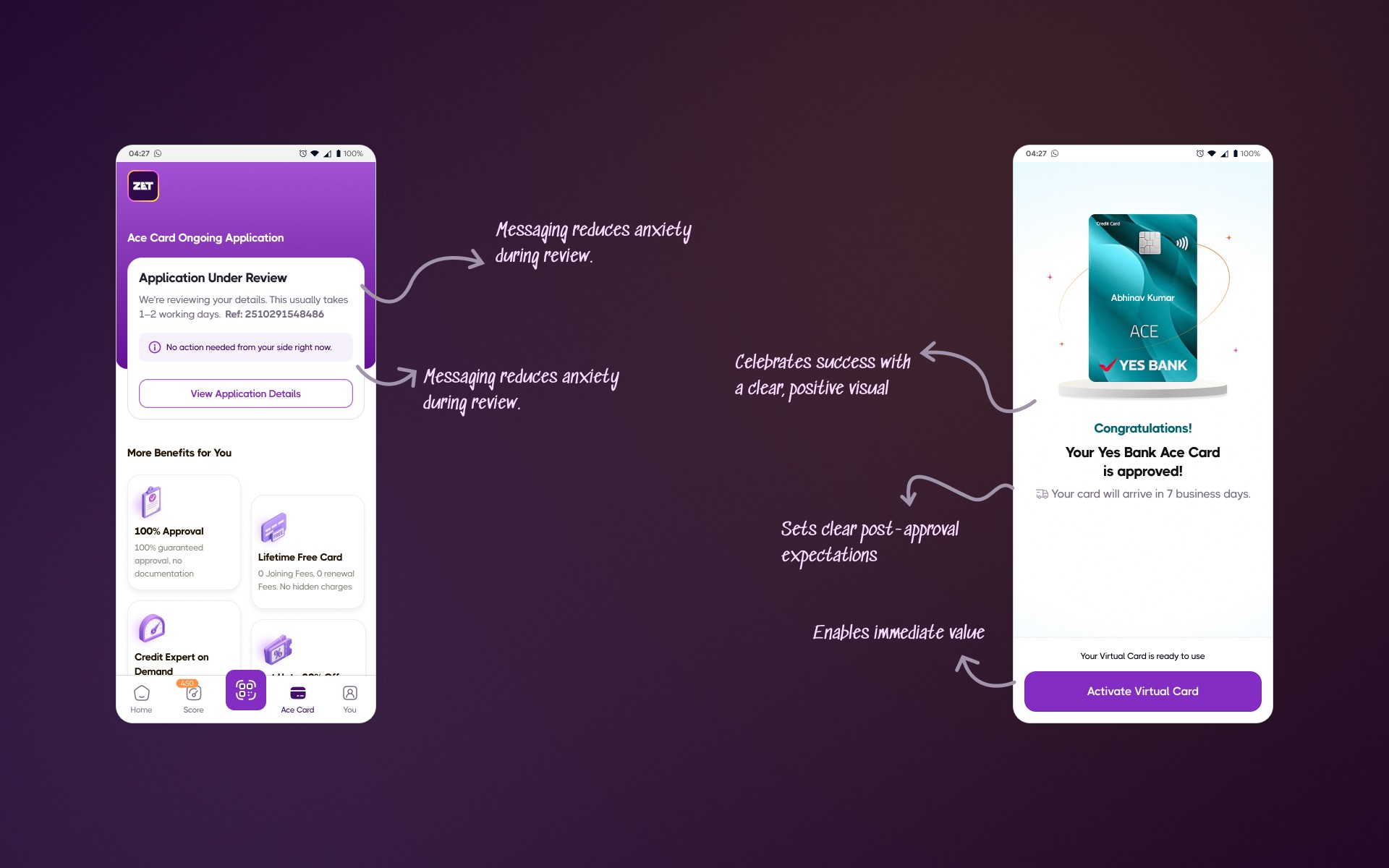
After submission, users are shown clear application status states with visual indicators and guidance on what happens next. Status screens explain whether the application is under review, requires action, or is completed, reducing uncertainty after submission.
Status transparency
Visual feedback
Why this approach?
Extending the experience beyond submission with clear status and next steps was chosen to reduce post-submission anxiety and prevent support queries or silent drop-offs.
4/4
Create a reusable and scalable system for credit card application journeys in ZET app
The journey was designed as a system, not a one-off flow, enabling faster bank integrations while maintaining a consistent and reliable user experience.
Why this approach?
ZET partners with multiple banks, each with different APIs and requirements. Designing a system rather than a one-off flow reduced future design and development effort and enabled faster onboarding of new bank partners.
System-driven onboarding flow
Reusable components
Delightfull experience